Article
How to Print on Poly Mailers: Methods Compared
Why ink struggles to grip polyethylene film, which do-it-yourself methods hold up in the post, and how flexo, gravure and digital presses differ.
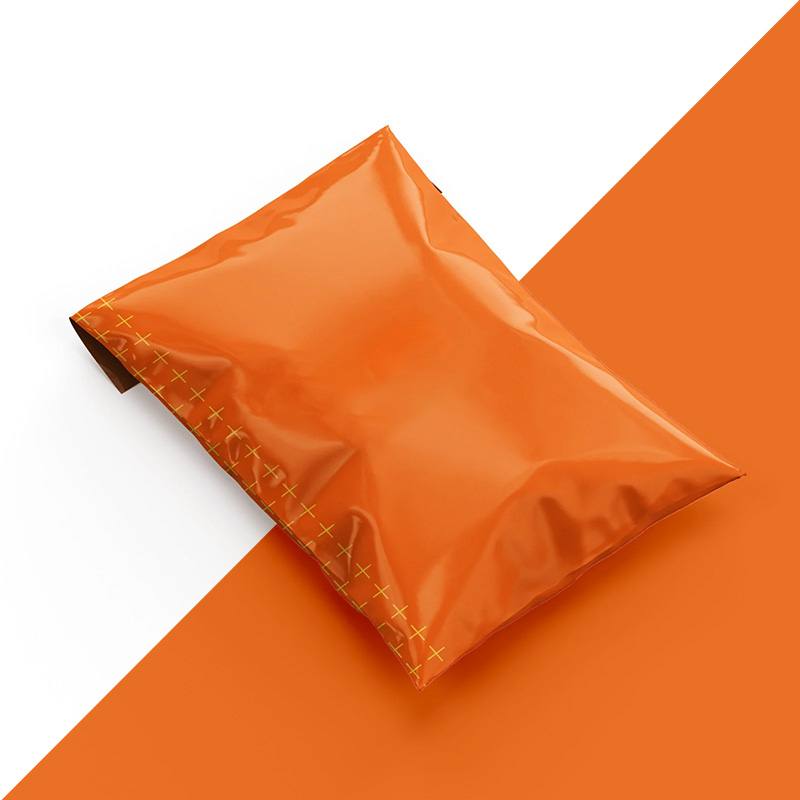
You have a logo, a box of plain mailers and a reasonable assumption: printing on a bag should work like printing on anything else. Then the stamp smears, the marker rubs off on your thumb, and the bag that went near a heat press has a hole in it.
The film is the reason. This post explains why polyethylene resists ink, which do-it-yourself methods survive a trip through the post, how commercial presses solve the problem, and how to choose between them by volume.
Why ink does not want to stay on a poly mailer
Paper takes ink because it is porous and its surface attracts liquid. Polyethylene is neither. It is a smooth, chemically inert plastic with a low surface energy, which means a liquid placed on it prefers to pull into beads instead of spreading into a film.
Converters measure this in dynes per centimeter. Untreated polyethylene sits at roughly 30 to 32. For an ink to wet the surface and bond, the film generally needs to sit several points above the ink’s own surface tension, and printers typically look for a reading in the high 30s or the 40s before they run a job.
Film reaches that level through corona treatment: the web passes under a high-voltage electrical discharge that oxidizes the top few molecules of the surface so ink has something to hold. It is invisible, it adds no thickness, and without it a commercial print would scratch off with a fingernail.
Two consequences follow for anyone trying to print at home. A plain stock mailer was probably never treated for printing, because nobody planned to print it. And treatment fades. PRINTING United Alliance notes that the increase is not permanent, giving the example of a polypropylene film treated to 40 dynes dropping to 34 within 30 days, with additives migrating to the surface among the causes. Slip additive is put into mailer film on purpose so bags slide apart, and it is exactly the kind of thing that sits between ink and plastic. The material variables behind mailer film explain what else goes into it.
Why heat is the second problem
The low-density polyethylene used for most mailers melts at about 105 to 115°C, which is 221 to 239°F, and it softens and distorts well before that.
Compare that with the tools people reach for. Standard heat transfer vinyl is pressed at around 305 to 315°F. A laser printer fuser runs hotter still. Dye sublimation needs roughly 400°F and a polyester surface. All three are above the point where the bag stops being a bag.
So any method that relies on heat to fix the image is out unless the product was specifically made for low temperatures, and even then you are working within a few degrees of failure on a film whose exact blend you do not know. Cold methods are the ones worth your time.
Do-it-yourself methods that hold up
For a few dozen to a few hundred parcels, four approaches are realistic. None of them is printing in the press sense, and the most reliable one does not put ink on the film at all.
Printed stickers and labels
A label sidesteps the whole surface-energy problem, because the ink is already bonded to the label face and a pressure-sensitive adhesive grips smooth film very well. You get full color, white on dark, and a design you can change next month without scrapping any bags.
This is the route to use until volume is steady. A matte sticker on colored blank mailers ready for labeling looks deliberate, and it costs nothing in setup. The limit is labor: every bag is handled once more.
Rubber stamps with solvent ink
A stamp works if the ink is right. Water-based dye and pigment pads are made to soak into paper and will stay tacky on film indefinitely. Solvent-based pads sold for non-porous surfaces dry by evaporation and leave a film of pigment behind.
Keep the design bold. Fine lines fill in, large solid areas go patchy because the bag has no give underneath, and a hard flat surface under the mailer matters more than pressure. One color, one position, accept some variation between impressions.
Screen printing
Screen printing is the only do-it-yourself method that lays down a thick, opaque layer of ink, so it is the one that can put a light color on a dark bag. It needs an ink formulated for polyolefin plastics, which is a solvent or UV-cured product and not the water-based or plastisol ink used on T-shirts. Plastisol has to be heat cured at a temperature the film cannot take.
It is also slow. Each bag is positioned, printed and racked to air dry without touching its neighbor. People who already own the equipment make it work for small runs. Buying the equipment for this purpose rarely makes sense.
Markers and hand lettering
Permanent markers use solvent ink and behave much like the stamp pad: fine on matte film, less so on gloss. It suits a handwritten thank-you on the back of a parcel. It is not a branding method.
Test a homemade print before you trust it
Whatever method you pick, the print has to survive conveyor belts, other parcels and rain. Ten minutes of testing on five bags tells you more than any product description.
- Clean the print area. Wipe it with isopropyl alcohol on a lint-free cloth and let it flash off. This removes dust, finger oil and surface slip.
- Apply the print on a hard, flat surface. Slide a sheet of board inside the bag if the back seam makes the panel uneven.
- Leave it alone. Give solvent ink at least several minutes, and ideally an hour, lying flat and uncovered.
- Rub it. Ten firm passes with a dry thumb, then ten with a damp cloth. Any color on the cloth is a fail.
- Tape it. Press a strip of ordinary clear tape over the print, burnish it down and pull it off sharply. Ink that lifts with the tape will lift in a sorting hub.
- Stack it. Put ten printed bags under a few books overnight. Check whether the print has set off onto the bag above.
- Repeat in a week. Additive keeps migrating to the surface, so a print that passed on day one can fail on day seven.
If a method fails step four or five, a different ink sometimes rescues it. If it fails step seven, the film is the issue and a sticker is the answer.
How printed mailers are made commercially
Commercial printing does not happen on finished bags. The film is treated and printed as a continuous roll, and the printed roll is then folded, welded and cut into mailers. That is why print cannot be added to an order after production, and why the coverage and color decisions for a printed run come before anything else. Three processes do most of this work.
Flexography. A flexible relief plate, usually photopolymer, carries the raised image for one color. An engraved metering roller called an anilox delivers a controlled film of ink to the plate, and the plate transfers it to the film. Each color has its own plate and station. Plates are a setup cost that spreads across the run, so flexo gets more economical as quantity rises. It is the workhorse of flexible packaging, and the Flexographic Technical Association publishes the standards and training material the trade works to.
Rotogravure. The image is engraved as tiny cells into a metal cylinder, one cylinder per color. Cells flood with ink, a blade wipes the surface, and the film picks up what remains. Cylinders cost more than plates and take longer to change over, and in exchange they hold very consistent color and fine tonal detail over very long runs.
Digital. No plates or cylinders. The image goes straight from file to film by inkjet or toner-based heads. Setup is minimal, so short runs and frequent design changes are practical, and every bag could in principle be different. The cost per bag does not fall much with volume, and the range of films a given digital press accepts is narrower.
| Method | Setup needed | Suits | Strength | Main limit |
|---|---|---|---|---|
| Sticker or label | None beyond the label order | Low or changing volume | Full color, changeable at any time | Hand applied, one more touch per parcel |
| Solvent ink stamp | A stamp and the right pad | Very small batches | Cheapest way to mark a bag | One color, uneven solids, rub risk |
| Screen printing | Screen, poly ink, drying space | Small batches with existing equipment | Opaque ink on dark film | Slow, air dry only |
| Digital press | Artwork file | Short to medium runs, many designs | Photographs and gradients, no plates | Cost per bag stays fairly flat |
| Flexography | One plate per color | Medium to long runs | Strong solids and spot colors at volume | Setup cost on small quantities |
| Rotogravure | One engraved cylinder per color | Very long runs | Consistent color and fine detail | Highest setup, slow changeover |
Choosing a method by volume and design
The decision is mostly arithmetic about how often the artwork changes and how many parcels leave each month.
- Volume still swinging, artwork still changing. Stickers on colored stock. You lose nothing if you rebrand.
- Steady volume, a simple mark in one or two colors. A printed run pays for itself, because the setup spreads thinly and you stop paying someone to apply labels.
- Photographic artwork or many versions. Digital, for as long as quantities stay modest.
- A light color on a dark bag. A press, with opaque white. Stickers do it too. Stamps do not.
- Print that reaches the edges of the bag. A press only. No do-it-yourself method covers a full panel evenly.
The mistake we would steer you away from is hand-stamping for long. It looks free, and then someone spends two hours a week on it and a share of the bags get rejected for smudges. Once a design has settled, compare that labor honestly against mailers printed with your own artwork.
Questions to put to any printer
A supplier who prints film every day will answer these without hesitation. Vague answers tell you something too.
- Is the film treated in line before printing? Treatment that happened months earlier may have faded.
- Which process will be used for this quantity? It tells you whether setup cost is working for you or against you.
- How is a brand color matched? A named spot color and a physical reference beat a screen every time.
- Is the ink on the outer surface, and how is rub resistance checked? Mailers are surface printed, so the ink takes the abrasion directly.
- Can I see the same film and finish printed before I commit? Gloss and matte carry the same ink very differently, and a physical sample before a full run settles it.
What to do this week
If you are shipping fewer parcels than would empty a carton of mailers in a month, order stickers, run the seven-step test on your bags and stop there. If you are past that point and the design has not changed in six months, gather three things: the size you use most, the monthly quantity, and the artwork as a vector file. With those in hand, ask for a custom quote and compare the result against what labeling costs you now.
Questions this raises
Can I run a poly mailer through my home inkjet printer?
It is a poor idea. Standard inkjet ink is water-based and is designed to soak into paper, so on plastic film it beads, stays wet and wipes off. The bag is also slippery and uneven in thickness at the seams, which is a reliable way to cause a jam.
Can a laser printer print on poly mailers?
No. A laser printer bonds toner with a heated fuser that runs far hotter than the temperature at which polyethylene film softens. The film can melt onto the fuser and the repair usually costs more than the printer is worth.
Does a Cricut or other cutting machine work for poly mailers?
The cutting machine is fine, because it only cuts the design. The question is what you cut. Adhesive vinyl applied by hand works and holds well on smooth film, while heat transfer vinyl needs a press temperature that most mailer film cannot take.
What kind of ink pad works on poly mailers?
A solvent-based pad sold for non-porous surfaces such as plastic, glass and metal. Ordinary dye and pigment pads are made for paper and never fully dry on film. Even with the right pad, give the print a few minutes before stacking the bags.
Will a permanent marker stay on a poly mailer?
Usually yes, because permanent markers carry a solvent-based ink that dries by evaporation instead of absorption. Expect it to hold better on matte film than on high gloss, and expect some rub-off on the most slippery bags. It is a reasonable way to add a handwritten note, not a way to brand a few hundred parcels.
Can you sublimate onto a poly mailer?
No. Dye sublimation needs polyester or a polyester coating to accept the dye, and it needs a press temperature well above anything polyethylene survives. The film would melt long before the dye transferred.
Why does my stamped logo smear days after it dried?
Two usual causes. Either the ink was made for paper and only skinned over, or the film surface carries slip additive that keeps migrating to the surface and lifts the ink. Wiping the print area with isopropyl alcohol before stamping, and switching to a solvent-based ink, fixes most cases.
How many colors can a flexographic press print on a mailer?
Each color needs its own plate and its own print station, so the limit is the number of stations on the press, which varies from one machine to the next. In practice contrast against the base film matters more than the count. Two strong colors usually read better on a parcel than six subtle ones.
Is digital printing on poly mailers lower quality than flexo?
Not in any way most customers would notice. Digital handles photographs and gradients well and needs no plates, which is why it suits short runs and frequent artwork changes. Its limits are the range of films it accepts and the cost per bag once the quantity climbs.
Can white ink be printed on a dark poly mailer?
Yes, on a commercial press, and it is one of the main reasons to move from stickers to a printed run. White is an opaque ink laid down as its own color, sometimes in two passes for density. Ask for a physical check if the white has to look clean against black.
Does printing make a poly mailer weaker?
No. The ink sits on the outer surface in a very thin layer and the surface treatment that helps it bond does not change the strength of the film in any way a parcel would reveal. Seal strength and puncture resistance come from the film and the welds.
Can I print on bubble-lined mailers with the same methods?
The do-it-yourself methods behave worse, because the cushioned surface gives under a stamp and a sticker has to bridge the dimples. Commercially printed bubble mailers are normally printed on the flat outer film before the lining is added. Draw the artwork with heavier lines either way.
Find out which print route fits your volume
Tell us what you ship, how many parcels go out in a month and what you want on the bag. We will say plainly whether a printed run makes sense yet, and quote it if it does.