Article
Poly Mailers vs Padded Mailers
When plain film is enough and when cushioning earns its cost, with the four failure modes that decide it and the arithmetic for working it out yourself.
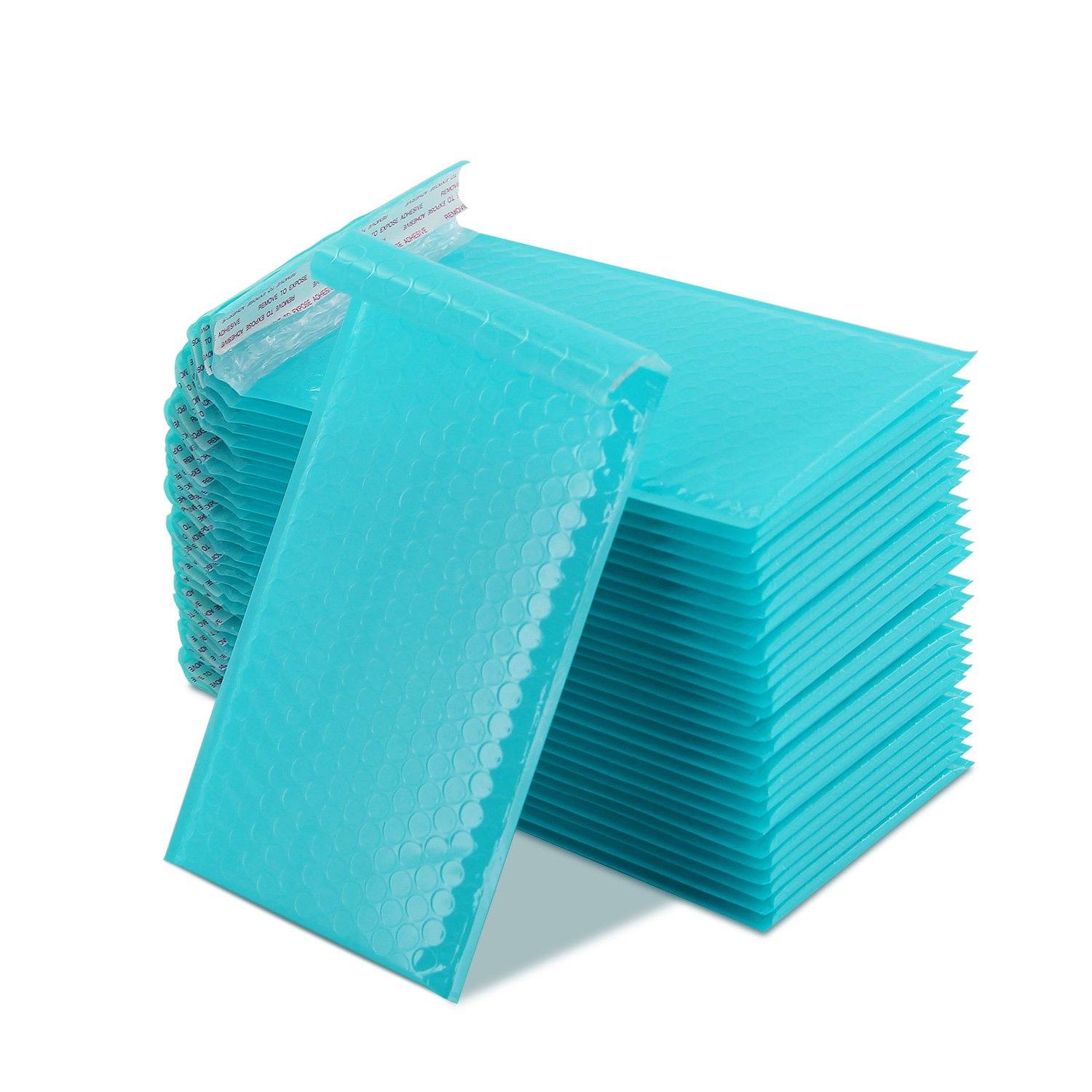
The choice between a plain and a cushioned mailer gets made on instinct more often than on evidence, and the instinct is usually the same: if something arrived damaged, buy the padded one.
Sometimes that is correct. Often it is money spent on a failure mode that was not the problem, and the damage rate does not move.
The reliable way to decide is to work backwards from how things are actually failing.
Four failure modes, and only two respond to padding
Packages fail in distinguishable ways, and the way something broke tells you what to change.
- Impact. Cracked, chipped or broken contents in an otherwise intact bag. This is what a bubble lining is for — it deforms under a sudden force and spreads it over a longer moment and a wider area.
- Abrasion. Scratched, scuffed or marked surfaces on undamaged items. This is a foam lining problem, not a bubble one. Bubble absorbs impact; it does not stop two surfaces rubbing.
- Crushing. Deformed, flattened or collapsed contents. Padding does nothing here. A flexible bag has no structure, so a load applied on top of it passes straight through whatever is inside.
- Movement. Inconsistent damage, contents rattling, wear concentrated at one end. This is a fit problem. A smaller bag fixes it; a thicker lining does not.
Two of those four respond to padding. Buying a cushioned mailer for the other two is a common and expensive mistake, and it is why some businesses upgrade their packaging twice without the damage rate improving. The protective mailer formats compared side by side map each format to the failure it answers.
What plain film actually does
A plain poly mailer does three things well, and it is worth being clear about them because they cover a large share of what gets shipped.
It contains. Contents stay together and stay clean, and the bag resists tearing under ordinary handling.
It resists moisture. Polyethylene does not absorb water, so a parcel left on a doorstep in rain arrives with dry contents — provided the closure was sealed properly, which is where most water actually gets in.
And it is light and thin, which matters on every parcel you send under weight or dimensional pricing.
What it does not do is absorb impact. Contents in a plain mailer experience whatever the parcel experiences, minus a little from the film itself.
For soft goods that is entirely sufficient. A folded garment is its own cushioning; a knitted item is better at absorbing impact than most linings are. Buying padding for a t-shirt is buying protection against a failure that cannot happen — which is why plain mailers for clothing remain the sensible default for a garment range.
When cushioning earns its cost
Cushioning pays for itself in a narrow but real set of situations.
Boxed items where the carton is part of the product — cosmetics, small electronics, anything sold in retail packaging that the customer sees. The lining protects the box rather than the contents, and a crushed box is a customer complaint even when the product inside is fine.
Genuinely fragile items, boxed first. A cushioned mailer protects a boxed ceramic well. It protects an unboxed one poorly, because cushioning works across a face and a mug presents an edge.
Items with hard corners in a mixed parcel, where a corner would otherwise press against film with the whole weight of the parcel behind it.
And anything where the failure is expensive relative to the packaging. If a damaged order costs you a replacement, a second shipment, a support conversation and a proportion of that customer’s future orders, the arithmetic for cushioning gets favourable very quickly. Where it does, the bubble-lined formats we run are the starting point.
Running the numbers
The comparison is not between two unit prices. It is between the cost of upgrading every parcel and the cost of the failures you avoid.
- Work out what one failure actually costs. Replacement goods, second shipment, staff time on the ticket, and a realistic estimate of the customers who do not order again.
- Work out the per-parcel cost difference between your current specification and the cushioned one, including any change in shipping cost from the larger outer dimensions.
- Divide the first by the second. That gives you the number of parcels per failure at which the upgrade breaks even.
- Compare it against your actual failure rate. Not your impression of it — pull the returns and damage data.
- Check whether damage is concentrated. If failures cluster in one product line, protect that line rather than the whole flow. This is usually where the answer is.
That last step is the one that saves the most money. A business upgrading every parcel because one product breaks is paying for protection on tens of thousands of shipments that never needed it. Splitting the range across two specifications is quoted the same way as one, as the checklist for ordering to a specification sets out.
The honest limits of a flexible bag
There is a point at which neither option is right, and recognising it early saves working through three specifications first.
A mailer has no structure. If your damage reports describe crushed cartons and deformed contents rather than broken ones, the problem is load rather than impact, and no lining changes that. The answer is a rigid carton, and accepting that at the start is cheaper than discovering it after two packaging changes.
Similarly, an item with a protruding part that cannot be tucked — a handle, a spout, a rigid corner — will work against film whatever is between it and the outside.
Fit is the other limit. Cushioning only protects where it sits between the contents and the outside. A small item in a large cushioned mailer has protection on its faces and open space beside it, and it will reach the end of that space at speed. Sizing correctly does more for arrival condition than moving up a bubble grade, and it costs less — the method for sizing against a packed order is worth running first.
What changes when you switch
Moving from plain to cushioned changes more than the unit price, and the second-order effects are worth knowing before you commit.
The outer dimensions grow for the same interior space, because the lining occupies room. A parcel that fitted a pricing band may no longer, which is worth checking with a weighed and measured sample rather than assuming.
Weight increases slightly. On any individual parcel this is trivial; across a high monthly volume under weight-based pricing it is a real line.
Storage volume increases. Cushioned mailers do not pack as flat, so a given quantity occupies more shelf.
And print behaves differently. The dimpled surface breaks up fine lines and closes small type, so artwork that worked on flat film usually needs heavier weights and simpler shapes rather than a straight rescale. The specifics of designing for that surface are set out on the printed bubble mailer page.
A practical way to decide
If you have damage data, start there and match the failure mode to the fix. If you do not, run both for a month.
Order a modest quantity of the cushioned specification alongside your current one, use it for the products you suspect are the problem, and track the two separately. A month of real shipments through your real network produces a better answer than any specification comparison.
And if the answer turns out to be that your parcels are arriving fine, that is a result too. Plain film covers more categories than the packaging industry generally admits, and paying for protection you do not need is as much a specification error as not paying for protection you do. If you want both specifications costed side by side, tell us what you ship.
Questions this raises
Is a padded mailer always safer than a plain one?
For impact, yes. For crushing it makes no difference at all, because a flexible bag has no structure whatever the lining. And for contents moving inside an oversized bag, a smaller plain mailer often outperforms a larger cushioned one.
Do padded mailers cost more to ship?
They weigh a little more and produce a slightly larger outer parcel for the same interior space, which can matter under dimensional pricing. Against a carton with void fill they remain substantially lighter and smaller.
Can I use a padded mailer instead of a box?
For soft goods and boxed items that are not crush-sensitive, usually yes, and it removes both carton weight and void fill. For anything needing structural protection, a mailer cannot substitute for a carton.
Still not certain which one your product needs
Describe what you ship and what has arrived damaged before. We will tell you which route we would take and price both if it is close.