Sustainability
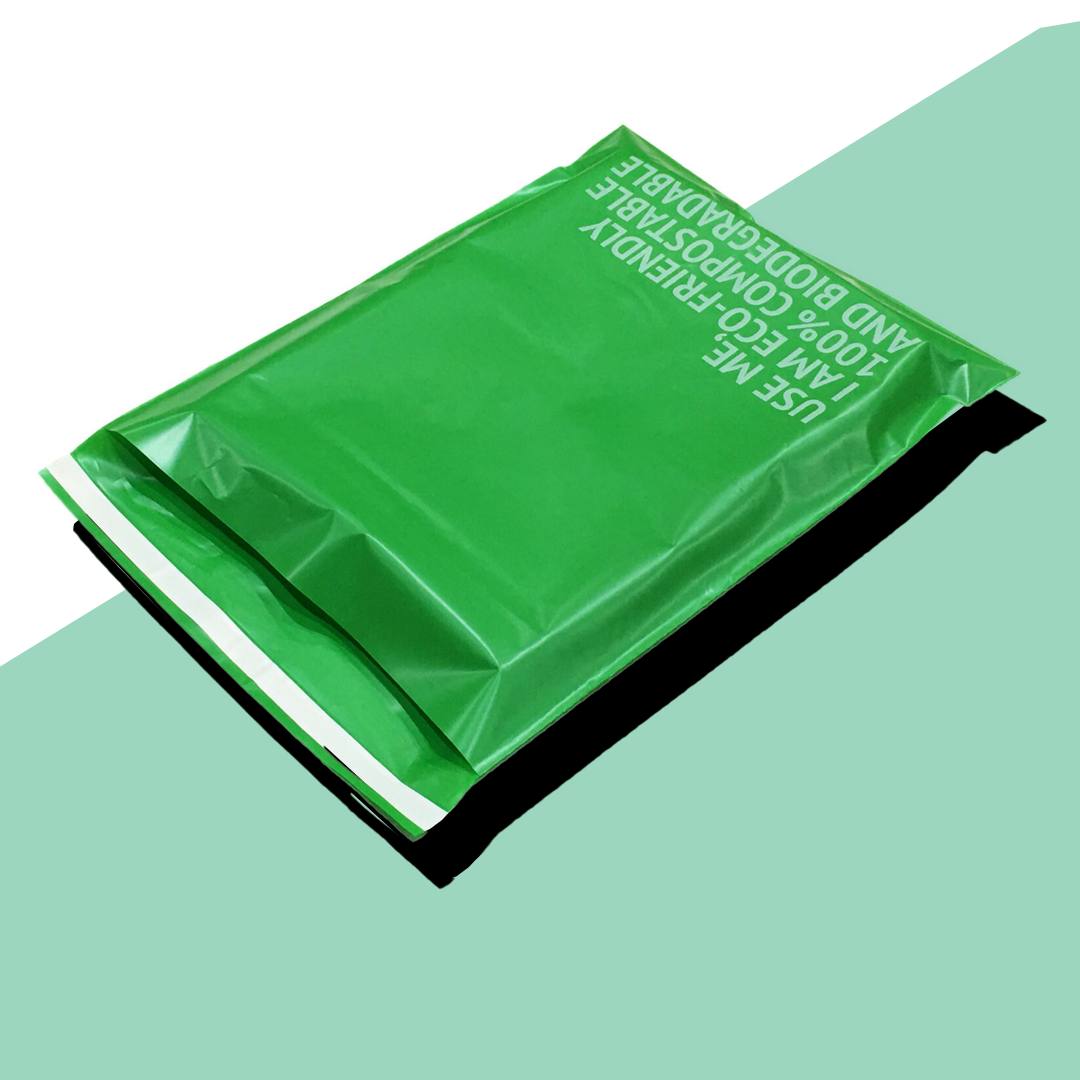
Compostable Poly Mailers
Compostable describes a disposal route, not a property of a bag sitting in a carton. A compostable mailer only composts if it reaches a process that can break it down, and whether that process is available to your customer is the question that decides whether the claim is worth anything.
This is where most compostable packaging programmes go wrong. A brand buys the material, prints "compostable" on it, and the bag goes into a general waste bin because the customer had nowhere else to put it. The environmental benefit does not happen, and the brand has made a claim it cannot support.
We can quote compostable-material mailers. Before you order them, this page sets out what has to be true for the choice to do what you want it to do.
From$0.30per unit, indicative — your quotation is priced against your own specification
Price compostable poly mailers
A short brief is enough to start. We come back with a written specification and a price.
What composting actually requires
It is a managed process, not a passive one.
Composting is a controlled biological process. It needs sustained temperature, moisture, oxygen and time, held within ranges that a bin at the bottom of a garden generally does not reach and a landfill site never does.
That is why the industry distinguishes between industrial composting, which happens at a facility built to hold those conditions, and home composting, which happens in a domestic heap at much lower temperatures. A material that composts in one may not compost in the other, and the two are assessed against different criteria.
We are not going to tell you which of those a film achieves. We were not supplied documentation to support either, and stating it without evidence is exactly the practice that has brought regulatory attention to this category. What we will do is confirm what the supplier of the specific film can evidence for your order.
Before you commit to a compostable programme
Work through these in order. If you fail at step two, the material choice will not save the programme.
Find out what your customers can actually access
Does food-waste or garden-waste collection in their area accept packaging? In much of the US, UK, Canada and Australia it does not, and acceptance varies street by street.
Decide what you will tell them to do with it
An instruction that leads nowhere is worse than no instruction. If there is no route, say what the honest alternative is.
Ask the supplier what is documented
Which standard, assessed by whom, for which conditions, and can you see the document. Ask before you order, not after.
Check what you are allowed to print
Environmental claims and certification marks are regulated in every market we serve. What you print is your claim to defend.
Test the material against your contents
Compostable films can behave differently in strength, seal performance and shelf life. Run a sample before you switch a whole flow.
Compostable against the alternatives
Set against the other two routes, compostable has the strongest story and the hardest execution.
| Row label | Compostable | Recycled content | Conventional film |
|---|---|---|---|
| Question it answers | Where does it go after use | What was it made from | Neither |
| Depends on customer infrastructure | Heavily | Somewhat | No |
| Documentation to verify | Standard and assessment | Feedstock and proportion | None needed |
| Typical cost position | Highest | Moderate premium | Lowest |
| Shelf life considerations | Yes — order to use | Standard | Standard |
| Risk of an unsupportable claim | High if unverified | Moderate | Low |
Practical differences to plan for
Compostable material changes more than the environmental story. These are the operational effects worth knowing.
Shelf life
Materials designed to break down do not sit in a warehouse indefinitely. Order to your usage rate rather than stockpiling.
Storage conditions
Heat and humidity affect these films more than conventional polyethylene. Cool, dry and dark matters more here.
Print behaviour
Ink adhesion and colour can differ from conventional film, so proof on the actual material rather than on a substitute.
Seal and strength characteristics
Not identical to conventional film. Test with your real contents and your real packing method before switching.
Cost
The highest of the three routes, which is worth confirming against a real quote before it is promised internally.
What we will confirm, and what we will not
Everything below is established for your specific order. We do not publish standards, marks or timescales on this page.
| Option | Choices | What changes |
|---|---|---|
| Material available |
| Availability differs between the markets we serve, so it is checked at quotation. |
| Documentation |
| Provided for review before you order. If none exists, we tell you that. |
| Disposal wording |
| We will not print a certification mark without documentation supporting it. |
| Size and format |
| Format options can be narrower on these materials than on conventional film. |
| Proofed on the actual material, because ink behaves differently on it. |
Options shown are the choices we can quote against. The exact specification for your order — including film weight, closure and print method — is confirmed in writing on your quotation.
If the infrastructure is not there
When your customers have no route to a composting process, compostable packaging delivers a claim rather than an outcome, and there are better places to put the same budget. Reducing material, right-sizing so parcels stop shipping air, and choosing a film with verified recycled content all produce measurable results without depending on infrastructure you do not control. The feedstock route is set out on the recycled content mailer page, which is the more practical starting point for most operations.
Questions about compostable poly mailers
Are your compostable mailers home compostable or industrially compostable?
We do not state either, because we were not supplied documentation to support a claim in either direction. We confirm what the supplier of the specific film can evidence for your order, in writing, before you commit.
How long does a compostable mailer take to break down?
We do not publish a timescale. Any figure depends on the specific material and on the conditions it is exposed to, and stating one without evidence is a claim we are not willing to make.
Can my customers put a compostable mailer in their food waste bin?
That depends entirely on what their local collection accepts, and many do not accept packaging at all. Check what applies in the areas you ship to before printing any disposal instruction, because an instruction that leads nowhere causes more harm than none.
Can compostable mailers be printed?
Yes, and we proof on the actual material because ink adhesion and colour can differ from conventional film. We will not print certification marks or environmental claims without documentation supporting them.
Do compostable mailers have a shelf life?
Materials designed to break down are affected by heat, humidity and time in storage. Order to your usage rate, store cool, dry and out of direct light, and rotate stock rather than holding a large buffer.
Talk through a compostable programme
Tell us which markets you ship to and what you want to be able to say. We will tell you what can be evidenced before anything is quoted.