Sustainability
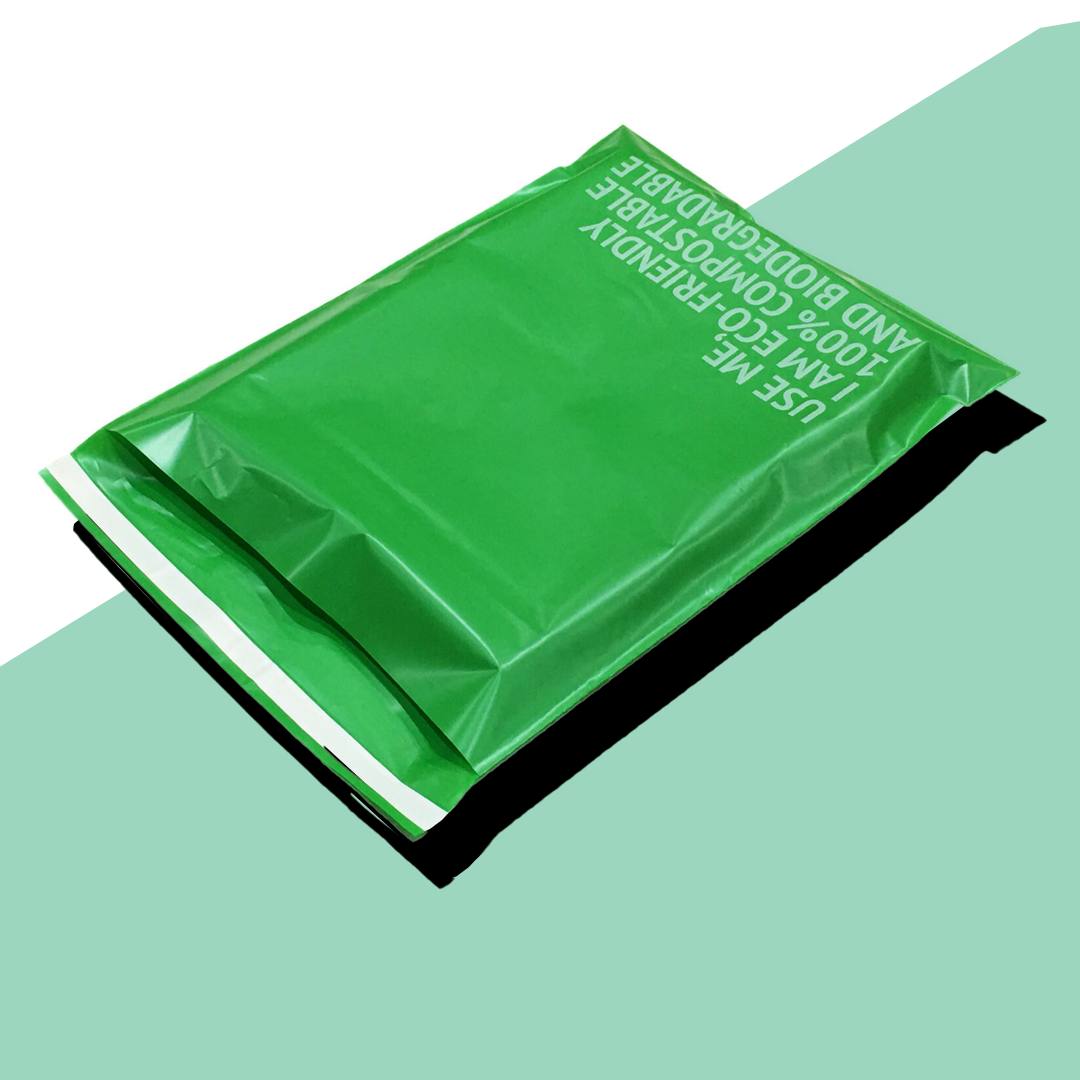
Biodegradable Poly Mailers
Of the three words brands ask for, biodegradable is the one that means the least. Almost everything biodegrades eventually. Without conditions and a timeframe attached, the word describes a property that every material has and tells a customer nothing about what will actually happen to the bag.
That vagueness is why advertising regulators across the markets we serve have paid particular attention to it, and why unqualified degradation claims are among the most commonly challenged statements in packaging.
We can quote mailers made from materials described by their suppliers as biodegradable. What this page does is set out what you would need to know before printing that word on a parcel, because the claim you print is the claim you have to defend.
From$0.30per unit, indicative — your quotation is priced against your own specification
Price biodegradable poly mailers
A short brief is enough to start. We come back with a written specification and a price.
Why the word on its own says nothing
Biodegradation is the breakdown of a material by microorganisms. Whether it happens, how completely, and over what period depends entirely on the conditions the material ends up in — temperature, moisture, oxygen, microbial activity.
A material that degrades in a warm, wet, oxygen-rich environment may sit unchanged for decades in a landfill, where oxygen is scarce and conditions are stable. Both statements can be true of the same film.
That is why a claim without conditions is not a claim. "Biodegradable" answers none of the questions a customer would actually ask: under what conditions, how completely, how long, and verified by whom.
The four questions a defensible claim answers
If a supplier cannot answer all four for the specific film they are selling you, the claim is not one you should print.
Under what conditions
Industrial composting, home composting, soil, marine, landfill. These are radically different environments and a material rarely performs the same in all of them.
How completely
Whether the material breaks down fully or fragments into smaller pieces. Fragmentation is not degradation, and it is a specific concern with some additive-based films.
Over what period
A timeframe, tied to the conditions named above. A timeframe without conditions is meaningless.
Assessed by whom
Against which method, by which body, evidenced by which document. A supplier saying so is not an assessment.
Where we stand
We were supplied no documentation, so we make no claim.
We publish no degradation timescale, no standard reference, no certification mark and no comparison against conventional film on this page. Not because the information is commercially sensitive, but because it was not supplied to us and we will not invent it.
If you need to make a degradation claim, we will go to the supplier of the specific film for your order and ask the four questions above. You will get what they can evidence, in writing, before you commit. If the answer is that nothing is documented, you will get that answer too.
That is a less appealing position than a page full of green symbols. It is also the only one that leaves you able to defend what you print.
The three terms, plainly
Brands often use these interchangeably. They are not interchangeable, and a customer-facing claim has to use the right one.
| Term | What it addresses | What must be true |
|---|---|---|
| Recycled content | What the film was made from | A named feedstock and a documented proportion |
| Compostable | A specific managed disposal process | Assessment against a defined process, and access to that process |
| Biodegradable | Breakdown by microorganisms, unspecified | Named conditions, completeness, timeframe and an assessment |
Of the three, recycled content is the easiest to substantiate and biodegradable the hardest. That should influence which one you build a customer promise around.
How we quote this material
The specification is the same shape as any other order. What differs is what we will put in writing about the material.
| Option | Choices | What changes |
|---|---|---|
| Material description |
| Quoted as their description, attributed to them, not restated as our claim. |
| Documentation |
| You see it before you order, either way. |
| Printed wording |
| We will not print an unqualified degradation claim or a certification mark without evidence. |
| Film weight |
| Tested against your contents, because these materials do not always match conventional film. |
| Storage guidance |
| Materials designed to degrade are more sensitive to heat and humidity in storage. |
Options shown are the choices we can quote against. The exact specification for your order — including film weight, closure and print method — is confirmed in writing on your quotation.
A better question to ask
If the goal is to reduce the environmental impact of your shipping rather than to put a word on a bag, degradation is rarely the highest-leverage change available. Right-sizing so parcels stop carrying air, reducing the number of components in a pack, and moving to a film with documented recycled content all produce results that can be measured and defended. Where to start is set out in our position on packaging claims, which explains what we will and will not put our name to.
Questions about biodegradable poly mailers
How long do biodegradable poly mailers take to break down?
We publish no timescale. Any credible figure has to be tied to specific conditions and a specific assessment method, and neither was supplied to us for these materials. We will ask the film supplier for whatever they can evidence for your order.
What is the difference between biodegradable and compostable?
Compostable refers to a defined, managed process with conditions attached and an assessment behind it. Biodegradable, used on its own, refers to breakdown by microorganisms under unstated conditions over an unstated period. The first can be verified; the second, unqualified, cannot.
Can I print "biodegradable" on my mailers?
We will not print an unqualified degradation claim. If you have documentation supporting qualified wording — naming the conditions and the timeframe — we will print what your evidence supports, and the responsibility for that claim in your market remains yours.
Are these mailers as strong as conventional ones?
Not necessarily. Materials formulated to degrade can differ in strength, seal performance and shelf life. Test a sample with your real contents and your real packing method before switching a live flow.
Why will you not just tell me it is eco-friendly?
Because it is not a statement anyone can substantiate, and regulators in the markets we serve treat vague environmental claims as a problem in their own right. We would rather give you something you can defend than something that reads well.
Ask what can be evidenced
Tell us what you want to be able to claim and where you sell. We will find out what the film supplier can document and show you before you order.