Article
Poly Mailer Thickness and Durability Explained
Why gauge figures rarely compare between suppliers, what actually determines whether a mailer survives, and how to test two films without equipment.
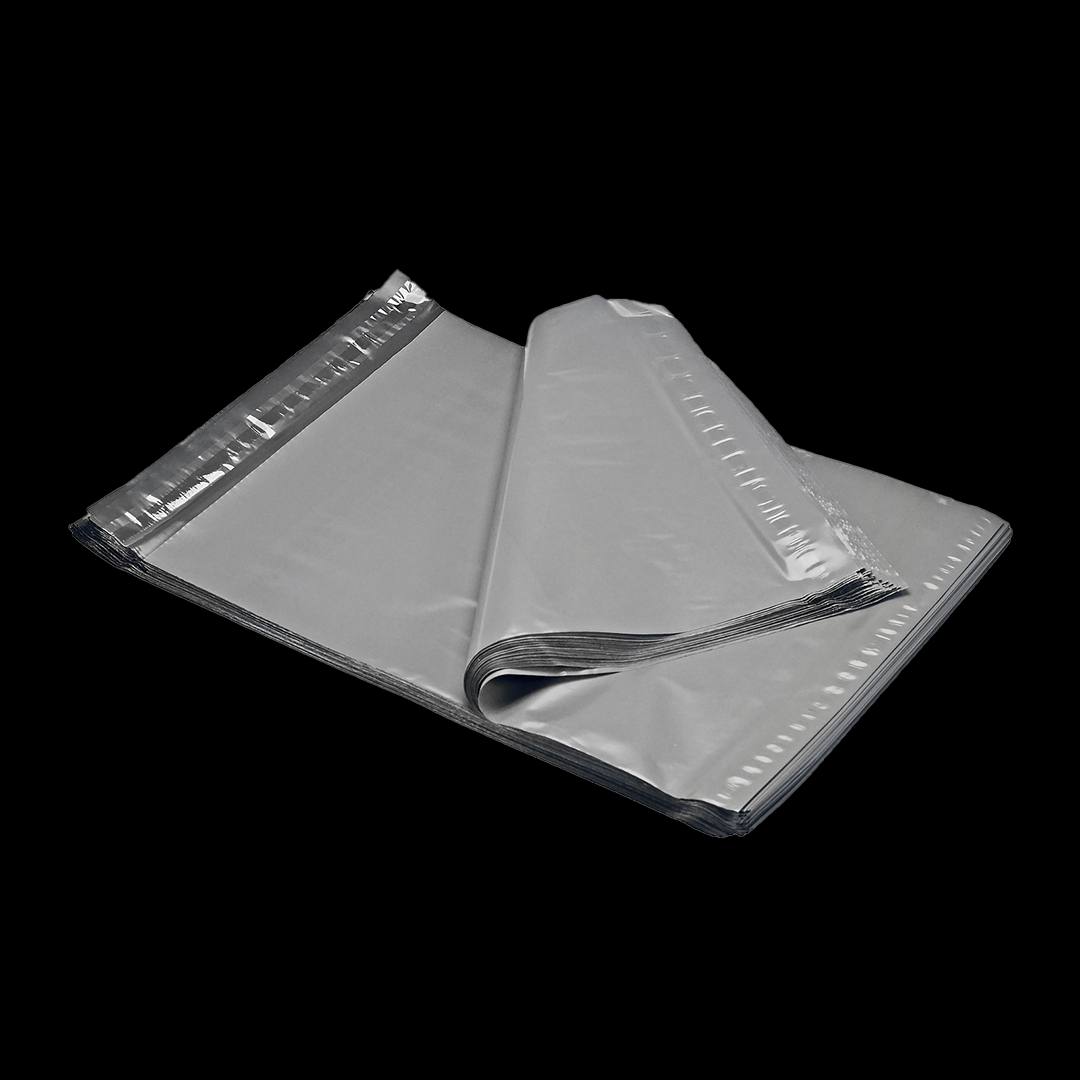
Thickness is the specification buyers ask about most and the one that tells them least on its own.
That is not because it is unimportant. It is because the number, as published, frequently is not comparable between suppliers, and because a large share of the failures it is supposed to predict have nothing to do with film strength.
Why the numbers do not compare
Three reasons, and none of them is dishonesty.
Units. Microns and mils both describe thickness and quotations mix them freely. Converting is trivial. Noticing that one supplier quoted a target while another quoted a minimum is not, and that distinction matters more than the conversion.
What was measured. A figure taken on flat film and one taken on a finished bag describe different things, and the difference between them is not a constant you can adjust for.
What thickness does not capture. How the film was produced, what it is blended from, and how the seals were formed all affect whether a bag survives a drop. Two films of identical stated thickness can behave noticeably differently in use.
None of that makes the figure useless. It makes it insufficient on its own, which is why the questions below are worth more than the number. What we will and will not state about a film is set out on the materials page.
Better questions than “how thick is it”
Five questions that reveal a genuine difference between two suppliers.
- What contents is this film recommended for? A supplier who answers with your products rather than with a number is thinking about your problem.
- What is the next weight up, and what does it change? Knowing what an upgrade buys tells you where the current specification sits.
- Is the figure a target or a minimum? A minimum is a commitment; a target is an aspiration, and the difference shows at the end of a run.
- Was it measured on film or on the finished bag? Ask both suppliers the same question and you will often find you were never comparing like with like.
- What happens if this film becomes unavailable? A supplier who has an answer has thought about consistency. One who has not will substitute quietly.
Our answers to all four sit on the material reference, including where the honest answer is that a figure is not published.
What actually determines whether a mailer survives
Film weight matters for exactly one failure mode: puncture and tear from concentrated force. That is a real failure and a common one, and it is worth specifying against. The other three, and which format answers each, are laid out in the comparison of protective formats.
It is not the only one, and for most operations it is not the largest.
Fit determines whether contents can move. A close fit stops the load gathering speed, which prevents the impacts that damage corners and open seals. This is usually the highest-leverage change available and it costs nothing.
Sealing technique determines whether the closure holds. A strip that was folded rather than pressed produces a partial bond that survives the bench and opens in a sorting hub. More film weight does not compensate for this at all.
Load type determines whether the bag is the right packaging in the first place. Crushing is not a film problem — a flexible bag has no structure, and a heavier film changes nothing about a load pressed on top of it.
Storage condition determines whether the adhesive still works. Heat, humidity and sunlight age the closure long before they affect the film, and a carton that has sat in a warm room for a year seals noticeably worse than fresh stock.
A business seeing failures should work through those four before increasing the film weight, because three of them are free to fix.
Testing two films properly
You do not need laboratory equipment to compare two candidate specifications. You need the same contents, the same day, and twenty minutes.
- Pack both with your real heaviest order. Not a proxy. The thing that actually fails is the thing to test with, including the inserts.
- Drop each once, flat, from bench height onto a hard floor. Then again on a corner. The corner drop is where concentrated force shows up and where weights separate.
- Press a hard corner against the film from inside. A box corner or a buckle, with steady thumb pressure. This is the single most diagnostic test for the difference between two weights.
- Test the seal deliberately. Peel, fold, press the full length, then pull the flap firmly. A partial bond is obvious immediately, and it tells you as much about the adhesive as about the film.
- Wet the outside and leave it twenty minutes. Water on the panel and pooled around the closure. Check whether anything reached the contents, which tells you where your actual moisture risk is.
Do all five on both films and the answer is usually unambiguous. It is also considerably more informative than any published specification, because it is your contents, your fold and your failure modes. Ask for both specifications as samples rather than ordering a run of either.
When a heavier film is genuinely the answer
There are categories where the standard weight is not adequate and the upgrade is not optional.
Anything boxed, because a carton corner concentrates the whole force of a drop onto one point. Anything with hardware — buckles, studs, rivets, zips — which behaves like a corner from the inside. Anything heavy for its size, such as leather goods or dense components. And large formats generally, because the contents that need a big bag are heavier and a large bag flexes more.
There are also categories where it is money wasted. Soft goods with no hard edges put almost no stress on film, and a folded garment is its own cushioning. Buying a heavy specification for apparel shipping bags is buying protection against a failure that does not occur.
The arithmetic for a lighter specification
If you are considering going lighter, the calculation is worth doing explicitly rather than by feel.
Work out what one failed parcel costs end to end — replacement goods, second shipment, staff time on the ticket, and a realistic estimate of the customers who do not return. Then work out the saving per mailer between the two specifications. Divide the first by the second, and you have the failure rate at which the saving disappears.
For most businesses that number is startlingly low, often a fraction of a percent. If the lighter film raises failures by more than that, it is costing money rather than saving it.
The way to find out is a controlled batch. A few thousand parcels on the lighter specification, tracked separately, run through your real network on real orders. That produces an answer; a specification comparison produces a guess.
Where the failure rate does not move, the saving is genuinely free and worth taking. The situations in which that is likely are set out on the economy specification page, which is candid about where it is not.
What to ask for on a quotation
Rather than asking for a thickness, ask for a specification that names four things: the film weight in whatever unit the supplier uses, whether that figure is a target or a minimum, what it was measured on, and what contents it is recommended for.
A quotation stating all four is comparable with another quotation stating all four. A quotation stating a number alone is not comparable with anything, and neither is a decision made from it. The ordering checklist is written to be used against any supplier’s quotation, including one that is not ours.
Questions this raises
What thickness of poly mailer do I need?
The question has no general answer, because thickness only matters relative to what is inside. Soft goods with no hard edges need very little; anything boxed or hardware-laden needs substantially more. Specify against contents rather than against a number.
Why do two suppliers quote different thickness figures for similar bags?
They may be measuring different things. Some quote film flat and some quote the finished bag, some quote a target and some a minimum, and units differ. Two numbers can look comparable without describing the same product.
Does a thicker mailer always mean fewer failures?
Only for failures caused by puncture or tear. It does nothing about crushing, abrasion or contents moving inside an oversized bag, and those account for a large share of the damage most operations see.
Compare a supplier quotation against what you actually need
Tell us what you ship and how it travels. We will recommend a film weight, explain the reasoning, and put a price against it.