Article
Packaging Ideas for Small Ecommerce Businesses
How to make a parcel look considered on a small budget, what to spend on first, and the commitments worth deferring until your range has settled.
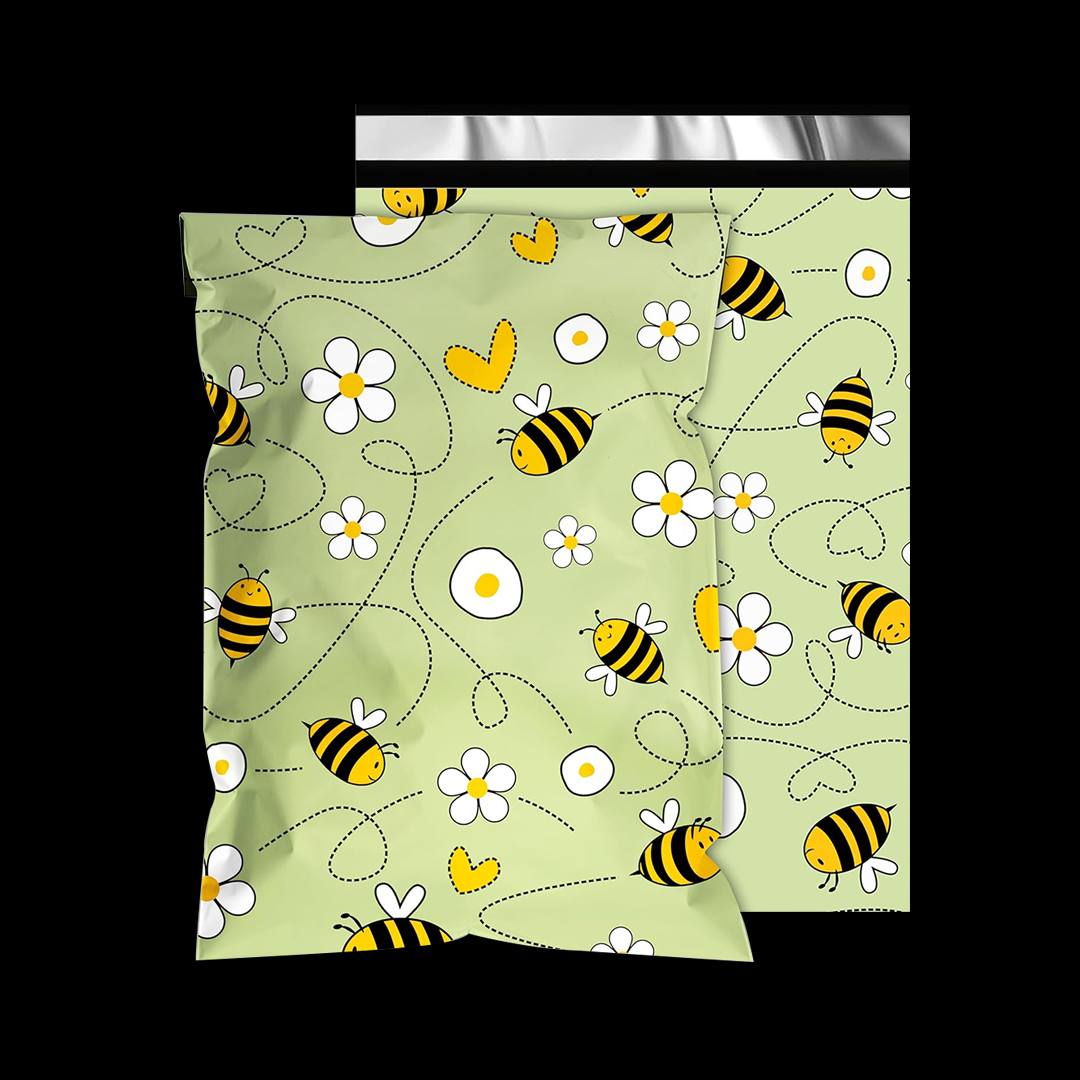
The first packaging decision a small business makes is usually the wrong one, and it is almost always the same mistake: printing too early.
Artwork gets committed before the range settles. A size gets chosen before the order profile is known. A year of stock arrives and is outgrown by month four, and the business keeps using it reluctantly because throwing it away feels worse than the alternative.
Everything below is arranged to avoid that.
What customers actually notice
Before spending anything, it helps to know what registers in the first few seconds of a parcel arriving.
Colour, cleanliness and care. That is most of it.
A coloured bag sealed neatly with a straight label reads better than an elaborate printed one sealed carelessly with a label applied at an angle. A parcel that has obviously been packed by someone paying attention communicates something no design does.
That is good news at small scale, because two of those three things are free and the third is cheap — a coloured bag from stock needs no artwork and no print run.
Where to put a small budget
Ranked by presentation gained per pound or dollar spent, at genuinely low volumes.
- A coloured film instead of white. A small premium over the cheapest option and the largest single change available. It makes a parcel recognisable on a doorstep with no artwork, no proof and no commitment.
- A printed seal sticker. Reorders in tiny quantities, costs very little, carries your mark, and can change the week after you change your mind about it.
- Something printed inside the bag. A card, a folded note, tissue in a matching tone. This is what gets photographed and what people keep, and it is the cheapest thing to reprint.
- A matte finish rather than gloss. A small premium, and it both photographs better and hides handling marks.
- A full printed run. High per unit at small quantities, and the last thing to buy rather than the first.
The first three together cost a fraction of the last one and account for most of what a customer registers. If you want to see a mark on a bag before spending anything, place one on a mailer outline first.
The sequence for a first order
Six steps, arranged so nothing early commits you to anything later.
- Ask for samples before buying anything. Two candidate sizes. Pack a real order — product, card, returns slip — into each and see which closes without straining. This single step prevents most first-order mistakes.
- Buy one size, plain, in a colour. One size keeps the bench simple. A colour gives recognition with no artwork approval in the chain.
- Put the branding on a sticker. Cheap, fast to reorder in small runs, and changeable at will.
- Order a quantity you will use in a season. The unit price is higher and the flexibility is worth more than the difference while your range is still moving.
- Ship a hundred parcels, then look at what happened. Which size ran out, what arrived damaged, what customers mentioned. That is real data, and it beats any prediction.
- Print when three things are true at once. Volume has stopped swinging, artwork has stopped changing, and customers are photographing the parcel. Not before.
Steps one and two are what unprinted stock is for, and nothing about it has to be decided in advance.
Decisions worth deferring
Four commitments that are cheap to postpone and expensive to reverse.
A printed run. It fixes your artwork, size, colour and quantity simultaneously, at the point when all four are least settled.
A year of stock. The discount is real and so is the risk. Adhesive ages, ranges change, and cash tied up in packaging is cash not in stock you could sell.
A fourth size. Most ranges that think they need four need three plus a plain oversized bag for genuine outliers.
A custom colour match. A stock colour close to your brand looks identical to a customer who has never seen your swatch, at a fraction of the cost and with no proof round — pick the nearest from the stock tones we hold instead.
Small things that punch above their cost
A handful of details cost almost nothing and change how a parcel feels.
A tear tab or a printed tear line, so the parcel opens without scissors. On a gift or a considered product, the opening is part of what was bought.
A consistently placed label. Same position, straight, every time. It costs nothing and it is the clearest signal of care a parcel carries.
Tissue in a colour that matches the bag. A few cents, and it turns opening the parcel into a second moment rather than one.
A returns strip, if you sell anything sized. It saves the customer finding their own packaging and saves you a support conversation, and it costs pennies per unit — the closure options cover how the second strip works.
A short hand-written line on small orders. Not scalable, and while you are small it is the most memorable thing in the parcel.
Storing packaging in a small space
Most businesses at this scale store packaging somewhere that was never designed for it — a spare room, a garage, under a bench.
Two things matter. Keep cartons flat and sealed so the adhesive stays clean. And keep them away from heat and direct light, because those age the closure long before they affect the film.
A spare room is fine. A garage through a hot summer, a car boot, or a shelf in front of a sunny window are all poor, and they are exactly where packaging tends to end up. It is another argument for ordering a season at a time rather than a year, which is how most small business orders are quoted.
Knowing when you have outgrown this
At some point the advice above stops applying, and the signals are recognisable.
You are packing enough that deciding between sizes slows you down. You are reordering often enough that the admin is annoying. Your volume is predictable enough to forecast a quarter. And customers are posting photographs of the parcel rather than just the product.
When those are true, the arithmetic flips. Printed packaging costs less per parcel than the sticker it replaces, a larger order is worth the storage, and a second size stops being a complication and becomes an efficiency.
Until then, coloured stock with a good sticker and something considered inside is not a compromise position. Plenty of established brands run exactly that permanently, because it lets them change seasonally without touching their packaging supply. The case for staying there longer than instinct suggests is set out on the blank stock page.
Questions this raises
What should a small business buy first?
Samples, then one size of plain coloured stock in a season-sized quantity, with the branding on a sticker. Nothing in that list commits you to anything you might want to change in three months.
How much packaging should I keep in stock?
A season rather than a year, especially if you store it at home. Closure adhesive ages faster in warm or bright conditions, and packaging that outlives your range is a write-off however cheap it was per unit.
Is there a minimum order quantity?
Quantities are quoted against what you actually need rather than against a published threshold. Smaller runs carry a higher unit price because setup spreads across fewer units, and the difference is shown so you can decide.
Starting small and want to know what a first run costs
Tell us roughly how much you ship and what you sell. We will quote a specification that suits the volume you are actually at.