Article
Poly Mailers for Clothing and Apparel Shipping
How garment fulfilment differs from general shipping, covering folding, opacity, returns handling and the size mix that suits a range with varied bulk.
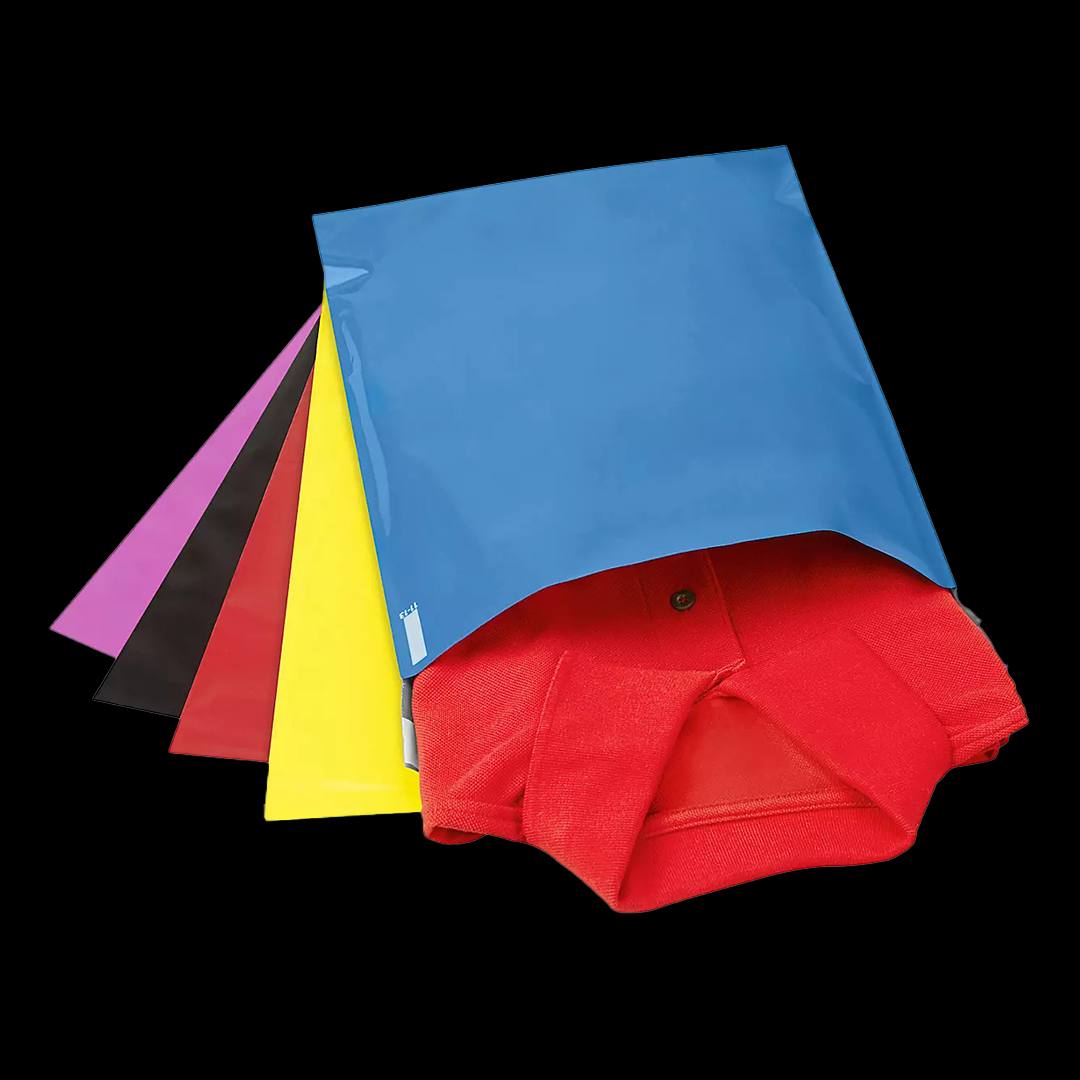
Clothing is the largest single use of poly mailers, and it has a problem no other category has to the same degree. The same brand ships a pair of socks and a padded coat, and both have to arrive looking like they came from the same place.
The second problem is that a meaningful share of what you send comes back. Fashion return rates are the highest in retail, and packaging chosen only for the outbound journey makes the inbound one more expensive than it needs to be.
Neither problem is solved by picking a size off a list.
The fold is part of the specification
Packaging decisions are usually tested once, calmly, by one person at a desk. They are then executed by a team under time pressure, and the fold that person achieved is not the fold the team achieves.
That gap is where sizing goes wrong. A garment folded carefully into a 10x13 fits with room to spare. The same garment folded at speed on a busy afternoon fills the bag, and the seal starts landing on contents rather than on film.
Two things follow. Test with your own packers, at working pace, on a normal day. And write the fold down — a consistent fold across a team makes parcel size predictable, which makes shipping cost predictable and makes packed parcels stack instead of sprawl.
It is one of the cheapest process improvements available in a fulfilment operation, and almost nobody does it. The method for sizing against a packed order is written to be run this way, with your own packers rather than at a desk.
Sizing across a range that varies
Garment bulk varies more within a single range than most buyers expect. These are sensible starting points for a single-item order including a card and a returns slip.
- Socks, underwear and small accessories. A 6x9 handles these comfortably. Move up if a typical order is several pairs.
- A t-shirt, vest or light top. Start at 9x12 and expect to move to 10x13 once inserts are included.
- Leggings, swimwear and light bottoms. A 10x13, and firmly so if two-item orders are common.
- Jeans and fine-gauge knitwear. A 12x15. The extra depth matters more than the extra footprint.
- Hoodies and sweatshirts. A 14.5x19 for anything heavyweight, fleece-lined or oversized. A thin unlined hoodie will go into a 12x15, but it fills it.
- Jackets and multi-garment orders. A 19x24, which is also the size that makes consolidation practical.
Most apparel operations settle on two or three of these rather than one. The exception is a range with genuinely uniform bulk, where standardising is worth the small waste on the lightest orders.
The size to make sure you have is the largest one. It handles a small share of orders and it is the one that generates damage claims when it is missing, because the alternative is forcing a coat into a bag built for a tee — which is what the larger formats exist for.
Opacity is a specification, not an assumption
A dark garment inside a pale mailer will read as a grey shadow through the front panel unless the film is specified to prevent it. Customers notice, and what they notice is that the packaging looks cheap.
This is entirely a specification question. Higher-opacity film and heavier film weights both address it, and either can be quoted against your actual range, as the materials page explains. Alternatively a darker base colour removes the question completely, which is one reason so many apparel brands run black.
Deciding this before ordering costs nothing. Discovering it after a run has arrived costs a run.
Returns are half of what your packaging does
Every packaging decision in apparel should be tested twice: once on the way out and once on the way back.
A single-strip mailer works perfectly outbound and forces the customer to find their own packaging for a return. What comes back arrives in cereal boxes, in bags that split, and in parcels with three labels on them — which is a processing cost, a damage risk and a customer experience problem all at once.
A second adhesive strip changes that. The customer opens along a tear line, repacks the item, peels the second strip and seals it. The parcel arrives in packaging you chose, at a size you expected, and there is nothing for you to include in the outbound order to make it possible. How the closures differ is set out in the guide to self-seal and returns strips.
The arithmetic is straightforward. Multiply the extra cost per mailer by your total outbound volume, and compare it against your return rate multiplied by the cost of supplying a separate returns bag plus the support contacts you field about how to send something back. For most fashion brands the second number is larger, and often by a lot.
Wholesale and direct are different problems
A brand selling both to customers and to stockists is running two packaging flows, and trying to serve both with one specification generally serves neither.
The direct parcel is one or two garments, sized close, branded, and opened by a customer who is forming an impression. The wholesale parcel is forty pieces going to one address, opened by staff checking a delivery against a purchase order, and discarded immediately.
The direct bag should be chosen for how it looks and feels. The wholesale bag should be chosen for consolidation, clear marking and count accuracy. The two overlap only in that both benefit from a clean closure.
Where wholesale buyers want goods shelf-ready, that adds a third layer — individually bagged garments that can go straight out without repacking. That is a separate line rather than a variation, and it is usually a translucent format so the piece is visible without being handled. The frosted garment bag options cover what that involves.
Setting up packaging for a garment range
If you are starting from nothing, this sequence gets you to a working setup without committing to anything you will regret.
- Take your five most-shipped products. Not the catalogue. Five will cover most of your volume.
- Pack each as a complete order. With the insert, the tissue and the returns slip, folded by the people who actually pack.
- Group them into two or three sizes. They will cluster naturally. Resist covering every edge case.
- Decide the returns route before ordering. Double strip, separate returns bag, or customer-supplied. Each has a different cost, and the choice belongs here rather than later.
- Settle sizes before artwork. Artwork is laid out for a specific panel, so a size change after approval means redrawing rather than adjusting.
- Order the sizes together. Where the film and specification match, setup is shared, and the batches will match each other.
The wider picture for a garment operation, including wholesale alongside direct, is on the clothing and apparel page.
The parcel is part of the product now
Apparel customers photograph and post what arrives more than any other category, which means the outside of the bag is doing brand work whether you designed it to or not.
That does not require an expensive answer. A coloured film rather than white, a matte finish rather than gloss, a consistently placed label and something considered inside the bag will read better than an elaborate printed design applied carelessly.
What reads badly is a scuffed white bag with a dark garment shadowing through it and a label applied at an angle. Every one of those is a specification or process decision, and all three are cheap to fix.
If you are weighing whether to print at all, the case for staying on plain coloured stock longer than you think is set out on the blank mailer page, which is worth reading before committing artwork to a run.
Questions this raises
What size mailer fits a folded t-shirt?
A 9x12 takes a folded cotton tee on its own. Once a card, tissue and returns slip go in with it, most brands find they need a 10x13. Test with your own fold at working pace rather than a careful desk fold.
Will dark garments show through a pale mailer?
Through standard-opacity film, often as a grey shadow. If your range is predominantly dark, specify higher opacity or a heavier film weight, or move to a darker base colour where the question does not arise.
Do apparel mailers need a returns strip?
For most clothing brands it pays for itself quickly. Fashion return rates are the highest in retail, and a second adhesive strip means the customer repacks in the original bag rather than finding their own packaging.
Set up packaging for an apparel range
Send your size range and how many you ship a month. We will recommend which sizes to hold and quote them together.