Serving customers in the United States
Poly Mailers for Massachusetts Businesses
A lot of business in Massachusetts runs on an academic rhythm. Demand climbs sharply in late summer, falls, climbs again after the winter break, and goes quiet in between — a shape that most packaging advice, written for steady growth, handles badly.
Ordering for a two-peak year is a different exercise from ordering for a flat one. Buy for the peak and you carry stock through two quiet periods; buy for the average and you run out twice.
Quote an order for Massachusetts
Tell us what you ship and where it goes. We confirm the specification, the schedule and the price in writing.
Who buys mailers here
Sectors where poly mailers are genuinely the right packaging, with the reason each one appears rather than a generic list.
Education-linked retail and merchandise
Demand shaped by term dates rather than by a retail calendar.
Publishing and print
A long-established regional base, with the flat-and-rigid shipping problem that comes with it.
Life sciences and instrumentation
B2B shipping where documentation and consistency matter more than presentation.
Subscription and direct-to-consumer
Businesses deliberately building recurring revenue to flatten the seasonal shape.
What we would suggest

9x12 Poly Mailers
Books, print and single-item sends, which dominate the seasonal spikes here.
Read the detail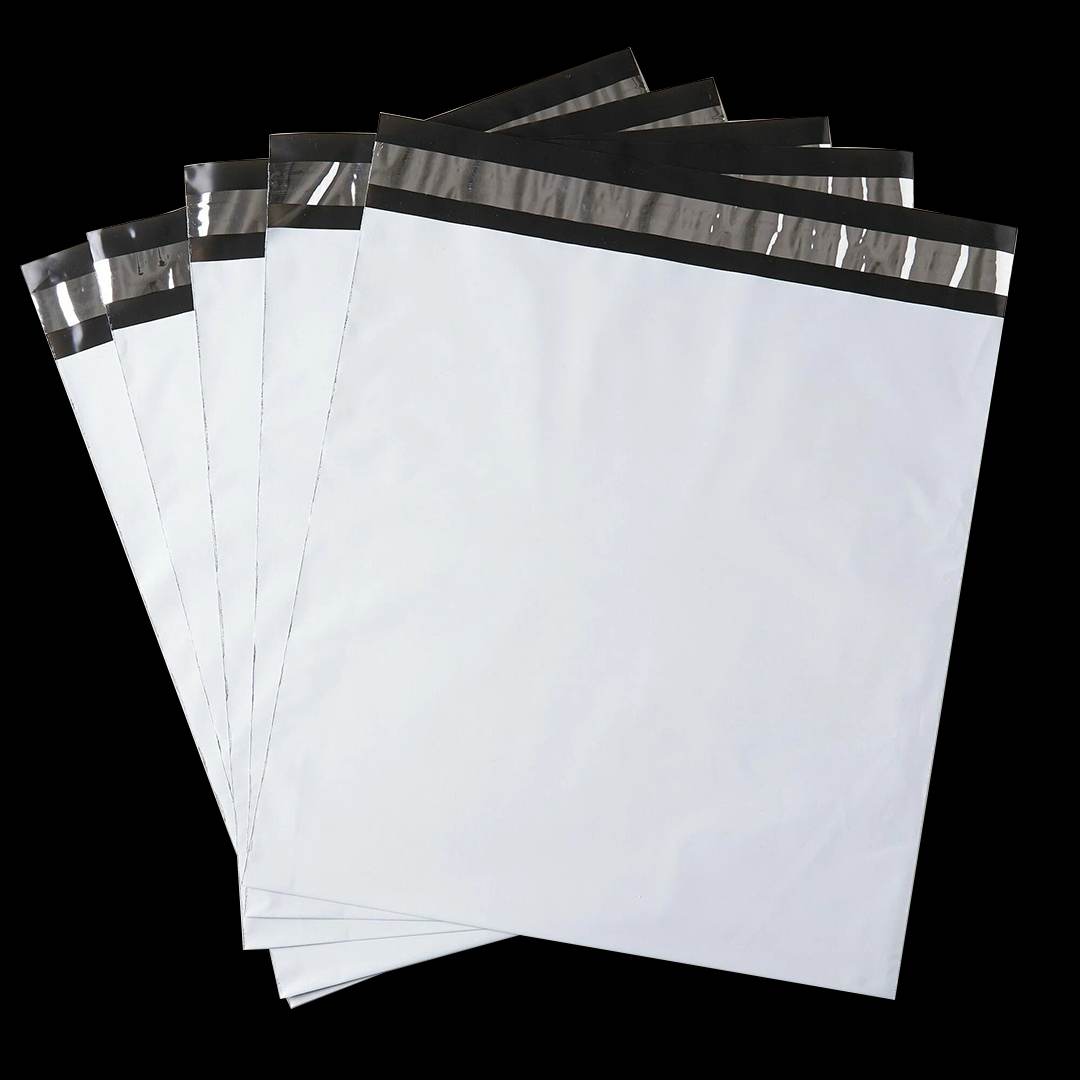
Blank Poly Mailers
Buying to a season rather than a year means avoiding artwork commitments.
Read the detail
10x13 Poly Mailers
The general-purpose size that absorbs peak variability.
Read the detail
Economy Poly Mailers
Where a peak is short and high-volume, unit cost dominates.
Read the detailOrdering for a two-peak year
The pattern that works, and it is not two big orders.
Plot parcels by month, not revenue
Packaging is consumed per parcel, and the two curves rarely have the same shape.
Order before each ramp, not before each peak
Stock has to be on the bench while volume is climbing, which is earlier than the peak itself.
Size each order to one peak plus a tail
Not to the year. Carrying peak stock through a quiet period ties up cash and ages adhesive.
Keep a plain fallback size
So a shortfall mid-peak never stops orders leaving.
Reconcile after each peak
What ran out, what did not move, what the actual per-parcel consumption was. Then set the next order.
Two orders a year, or four
The answer depends on your storage more than your cash position.
| Row label | Two large orders | Four smaller orders |
|---|---|---|
| Unit price | Lower | Higher |
| Stock held through quiet periods | Substantial | Minimal |
| Exposure to a specification change | Higher | Lower |
| Admin | Less | More |
| Risk of ageing adhesive | Real | Low |
If you store in a controlled space and your specification is settled, two orders usually wins. If either is not true, four costs less in practice than it appears to on the quotation.
Flattening the curve
The most effective response to seasonal demand is usually commercial rather than logistical: adding a recurring product line changes the shape of the year and makes every downstream decision easier, packaging included. Businesses that do this find their packaging planning becomes almost trivial, because a known subscriber count is a known parcel count. What that looks like operationally is set out on the subscription operations page.
Questions from Massachusetts buyers
How should I order packaging for seasonal demand?
Order before each ramp rather than before each peak, and size each order to one peak plus a tail rather than to the year. Carrying peak stock through a quiet period ties up cash and ages the closure adhesive.
Is it cheaper to place one large order a year?
The unit price is lower, and whether that is actually cheaper depends on your storage conditions and how settled your specification is. Stock that ages or becomes the wrong specification erases the saving quickly.
What if we run out mid-peak?
Keep a plain fallback size in stock alongside the main line. A shortfall in the branded bag then slows nothing down, which lets you order the branded quantity tightly rather than defensively.
Plan around your peaks
Send us your parcel volume by month and we will propose an ordering rhythm rather than a single quantity.