Serving customers in the United States
Poly Mailers for Jacksonville Businesses
Jacksonville’s port and logistics base produces a particular kind of operation: goods arrive by the container and leave one parcel at a time. Everything about the packaging decision sits at that transition point.
The interesting constraint is that the inbound format was decided by somebody else, often on another continent, and the outbound format has to work regardless of what turns up.
Quote an order for Jacksonville
Tell us what you ship and where it goes. We confirm the specification, the schedule and the price in writing.
Who buys mailers here
Sectors where poly mailers are genuinely the right packaging, with the reason each one appears rather than a generic list.
Import and distribution
A port city with a business base built around goods arriving in bulk.
Third-party fulfilment
Operations breaking down imported stock for several brand clients.
Ecommerce
Own-channel brands importing and fulfilling from the same location.
What we would suggest

Blank Poly Mailers
Breaking down stock for multiple clients rules out branding on the outer.
Read the detail
10x13 Poly Mailers
The outbound standard once bulk goods are broken into single orders.
Read the detail
Economy Poly Mailers
Where packaging is a per-unit line in a high-throughput operation.
Read the detail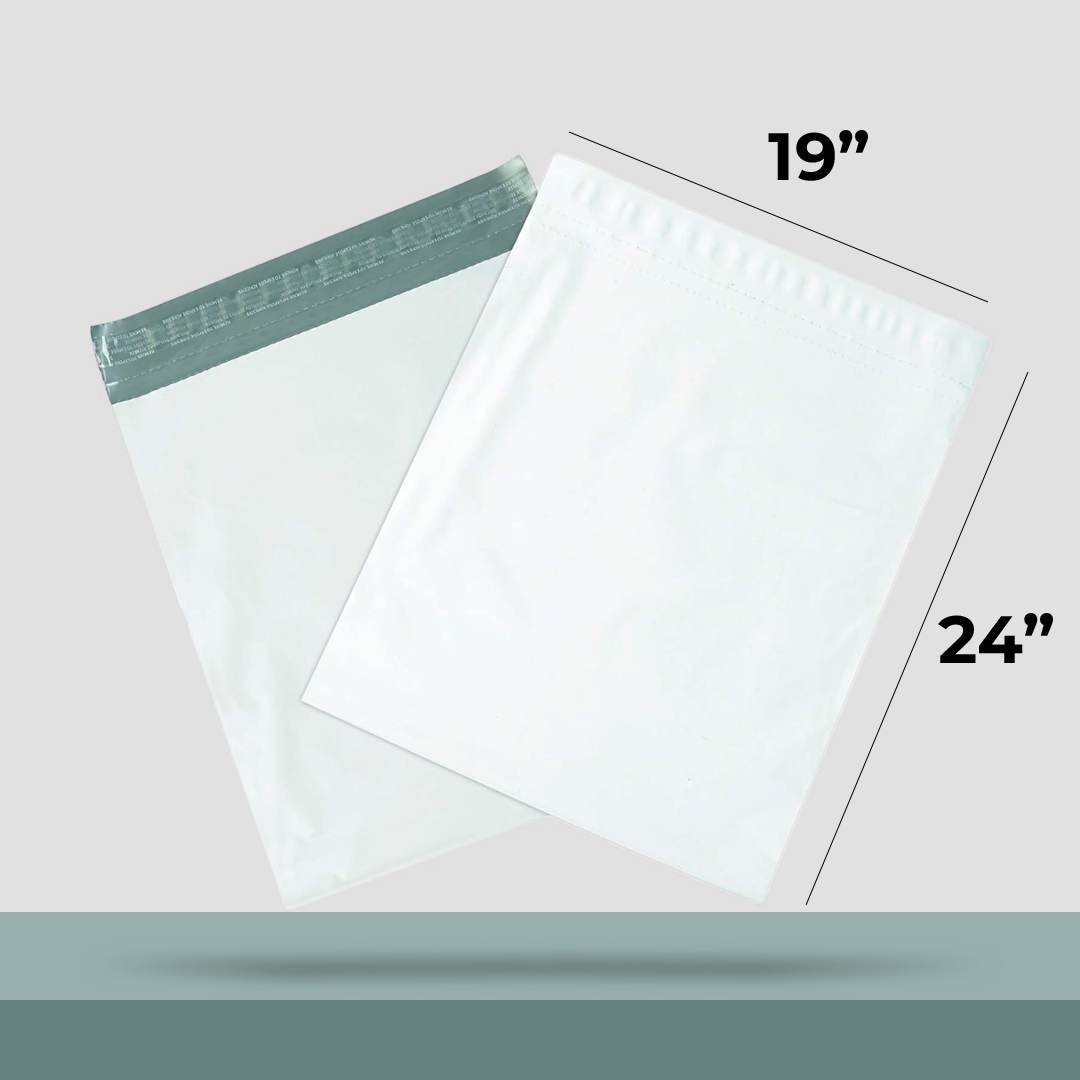
19x24 Poly Mailers
For the portion of outbound volume that goes to trade rather than to consumers.
Read the detailSpecifying at the break-bulk point
Five decisions that determine how efficiently a container becomes parcels.
Find out what arrives inner-packed
Goods that arrive individually bagged need no further packaging beyond the mailer. Goods that arrive loose need two layers.
Size against the unit, not the case
The case quantity is irrelevant to the outbound decision. The single unit is what has to fit.
Decide where inner bagging happens, if it is needed
Doing it at the point of unpacking is faster than doing it per order later.
Standardise the outbound range hard
A break-bulk operation runs on repetition. Two or three sizes, with written rules.
Check what printed information must carry through
Origin marking, warnings and barcodes on the inbound packaging may need to appear on the outbound one.
What goes wrong at this transition
Sizing against what arrived
The inbound format tells you nothing about the outbound requirement. Size against the single unit a customer receives.
Missing required markings
Information printed on inbound packaging sometimes has to appear on what the customer receives. Check before it becomes a compliance problem.
Double handling
Bagging individually at order-picking time rather than at unpacking time costs a step on every order rather than once per case.
Too many outbound sizes
A high-throughput operation loses more to bench decisions than it saves on film.
Storage between the two
Goods sitting between arrival and dispatch is inventory, and so is the packaging waiting to be used on it. In this climate that second stock needs the same attention as the first: sealed, off the floor, away from external walls and out of direct light, because heat and humidity age the closure adhesive rather than the film. The state-level view of that problem is set out on the Florida page.
Questions from Jacksonville buyers
Should goods be bagged at unpacking or at order picking?
At unpacking, almost always. Bagging once per case as stock is put away costs less than bagging once per order later, and it means a picker handles a ready unit rather than a loose one.
Does printed information on imported packaging need to carry through?
Sometimes, particularly warnings, origin marking and barcodes. Check what applies to your product category before it becomes a compliance question, and send us the required wording so it can be printed rather than stickered.
How many outbound sizes should a break-bulk operation run?
Two or three, with written rules at the bench. A high-throughput operation loses more to packers deciding between sizes than it saves by matching every parcel perfectly.
Specify an outbound range
Tell us what arrives and what a customer receives. We will specify the smallest outbound range that covers the gap.